Contracting businessUpdated 6 May 20269 min read
Tools of the trade: what a modern electrical van actually needs
A van that can earn is a calibration date, a spare RCD, a documentation kit and the discipline not to buy a gadget because an ad said “true RMS”. Testers, PPE, consumables and theft are the kit list that still matters after the unboxing video ends.
By Tom Rafter
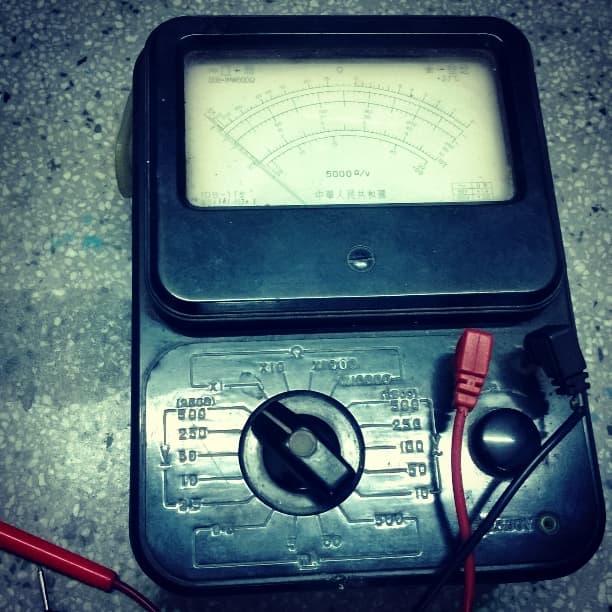
The van is a mobile workshop with a licence number on the side. What it needs is not what a catalogue needs to sell. It needs the instruments that decide whether a circuit is dead, the PPE that still works when the day runs long, the consumables that prevent a second trip, and a folder that can prove you tested what you said you tested.
This is a contracting-business list for people who already own a pair of sidecutters. It is not exhaustive and it is not a brand endorsement. It is the kit that still matters when the unboxing video is over.
A one-van firm feels the cost of every tool twice: once at the wholesaler, and again when it is stolen. Buy the pieces that earn. Leave the rest on the shelf.
Testers that stay in calibration
The instrument that tells you a circuit is isolated is not a decorative extra. AS/NZS 3000’s verification, AS/NZS 4836’s safe-work method, and the certificate you sign all assume a tester that is telling the truth.
Minimum, for a contractor who still does installation and fault-finding:
A proving unit and a two-pole voltage tester, or another voltage-detection method you actually trust, used every time you isolate. The test-prove-test habit dies when the tester lives under a bag of glands. Put it in the same pocket.
A true-RMS multimeter that will survive a van, with leads that are not split to the copper. Cat ratings are not a marketing stripe. Match the instrument to the circuits you work on. A cheap meter with a heroic category sticker is still a cheap meter.
An insulation-resistance tester — a megger, in the language of the trade — that will do the voltages AS/NZS 3000 expects for the circuits you verify. You cannot issue an honest certificate on a new circuit you have not insulation-tested. You cannot fault-find a damp site shed on a wet week without one. If you do construction-site supplies, this instrument earns its keep in the rain.
An RCD tester that can do the tests your inspection and commissioning work requires, not only the button on the device. The button is a check. The instrument is a record.
A clamp meter that will read current on a phase and on a neutral without you having to believe a nameplate. Load-balance arguments end when a number appears.
A socket tester can be a quick screen. It is not a substitute for polarity and earth-continuity tests on a new installation.
Calibration is a date and a certificate. Annual is a common commercial pattern; the manufacturer and the lab you use have the last word. Dropped, wet, or suddenly optimistic instruments go back early. Keep the certificates in the same folder as the job files. An inspector or an insurer who asks “how did you know it was dead?” is asking about the method and the instrument.
Write the next calibration date on the tester and in the diary. A fleet of two testers, one in the lab and one in the van, is how a one-person firm stays at work.
Insulation resistance, RCDs and the tests you will be asked to defend
Insulation resistance is how you find the damaged cable in a wet ceiling and how you prove a new circuit is not already a fault. Learn what a sensible reading looks like on the circuits you actually pull. A surprising number is a reason to stop, not a reason to press the button again until it looks friendlier.
Store the leads so they are not crushed in a door. A broken lead is a broken instrument.
RCD testing on construction boards, on changeovers, and on a residential board you have just filled, is part of commissioning. Record the result against the circuit, not against “the board” as a blob. When a tenant later says “it never worked”, the sheet is the conversation.
If you test and tag hired tools or site leads, that is a different standard — AS/NZS 3760 — and a different competency. Do not blur it with installation verification. Do not use an installation RCD tester as a pretend tag-and-test system unless you know what you are doing.
Loop-impedance and prospective-fault-current measurements belong on some jobs and some certificates. If you do that work, own an instrument that can do it and a method you can explain. If you do not, do not guess the number from a table in the back of a van manual and write it down as a measurement.
PPE that is used, not displayed
WHS law in the states and territories requires you to control risk. PPE is the last control, not the first, but it is still a control you must have when the others have run out.
Eye protection that people will actually wear. Hearing protection for the hammer drill and the plantroom. Gloves that match the task: mechanical for pulling in, a separate pair for the chemicals and the dirty pit, and insulated gloves only if you have a process that keeps them tested and dry — they are not fashion. A hard hat on construction sites. A harness and a working-at-height method if the job leaves the ground, not a belt that has lived under the seat since 2018.
Arc-rated clothing is a conversation for the work you actually do. A contractor who only ever isolates dead and works dead has a different exposure from a person who works on or near live apparatus. Australian practice, AS/NZS 4836 and your state electrical safety office are the references. Do not buy a branded shirt and call it an arc-flash programme.
Sunscreen, water and a way to wash your hands are PPE in the Australian sense. So is a pair of boots with a sole you can still feel a ladder through.
Replace PPE when it is tired. A cracked faceshield is decoration.
Consumables and the spare RCDs
The second visit is the expensive one. The van should prevent the stupid second visits.
A working set of ferrules, boots, numbered markers, and a label maker with tape that does not fall off in a hot board. Legends written in Texta are how the next person isolates the wrong tenancy.
Glands in the sizes you use, locknuts, a handful of DIN rail, a metre of earth, a length of 2.5 and 4, a couple of junction boxes that will accept a mechanical connection you can defend.
Fuses and circuit-breakers in the ratings you actually meet, not a museum of leftovers. Spare RCDs — Type A at least, and whatever else your work uses — in 1- and 2-pole if you do houses, 4-pole if you do small commercial three-phase. A failed RCD at the end of a board change is a dark tenancy or a return trip. Carry the device.
Heat-shrink, tape that is not a melted relic, cable ties that will not become a rat’s nest in a year, and a knife that still has a nose.
Lockout hasps, padlocks with a unique key, and tags. Isolation is a method; the van has to carry the hardware. One padlock that everyone shares is not a lockout system.
A first-aid kit you have opened, and an extinguisher that is in date if you carry one. Know whether your state or your site induction expects them.
The documentation kit
Paperwork is a tool. The modern van carries:
Blank or digital certificates for the states you work in.
A way to produce a test sheet — insulation, continuity, polarity, RCD — that can be attached to the job.
A camera that is not only your personal phone if you would rather keep client sites off a private roll. Photographs of the MEN, the incoming arrangement, the defect you found, and the finished legend.
A copy of the current AS/NZS 3000 you actually use, electronically if that is how you read, and the other standards the day’s work needs: AS/NZS 3012 on a construction site, AS/NZS 3008 if you are sizing, AS/NZS 2293 if you are in emergency lighting. A 2018 photocopy is how you quote a withdrawn clause.
Business cards or a QR that gets the client to the invoice details. Licence numbers on the quote.
A notebook that works when the phone is dead. Isolation notes, clamp readings, the name of the person who said you could start.
The documentation kit fails when it is “on the laptop at home”. If you cannot issue the certificate from the driveway, you will issue it never.
What not to buy from a gadget advertisement
The internet will sell you a thermal camera the size of a biscuit, a Bluetooth everything, a “kit of 200 pieces”, and a voltage detector that lights up near a microwave. Some of those things are useful after you already have the real instruments. None of them replace the real instruments.
Do not buy an insulation tester because the listing says 1000 volts and the price is the price of a lunch. If you cannot calibrate it, you cannot defend it.
Do not buy a non-contact detector as your only means of proving dead. It is a hint. It is not a proof.
Do not buy a crate of no-name RCDs because a marketplace had a sale. You are putting that device between a person and an earth fault. Use gear you can identify, install to the manufacturer’s instructions, and stand behind.
Do not buy a “lockout kit” of plastic tags with no padlocks, or a shared key. The hardware has to implement the method.
Do not buy tools as a way of avoiding learning the test. A more expensive meter will still record a lie if you measure the wrong thing.
A thermal camera, later, is a genuine industrial tool. On a one-van domestic book it is optional. Learn to feel a warm neutral with the right method and a cautious hand on the insulated side of the conversation before you trust a rainbow picture.
Theft, insurance and the habit that saves the testers
Testers walk. They walk out of an open van at a Bunnings car park, out of a site shed, and out of a house when you have gone back for a gland. The insulation tester and the RCD tester are the ones that stop you working.
Serial numbers, photographed, in a folder. Engraving if your insurer likes it. A habit of putting the testers in a bag that comes inside at lunch and at night. A van lock that is more than the hope that nobody will try the handle.
Tell the insurer what you actually carry. A policy that thinks you own a drill and a meter will not replace a calibration pair and a clamp. Overnight street parking and tools-on-site are the clauses that bite. Read them.
If something is stolen, report it, record it, and think about the certificates you issued with that instrument. The calibration certificate has a serial number. Your job files should too.
Do not leave a van with a magnetic sign, an open window and a megger on the passenger seat and then describe yourself as unlucky.
A van kit checklist
- Voltage tester plus proving unit, used on every isolation. Test-prove-test.
- Insulation-resistance tester in calibration, with leads that are not crushed.
- RCD tester in calibration. Record results against circuits.
- True-RMS meter and a clamp meter you trust.
- Spare RCDs of the types you install, plus a working label maker.
- Lockout padlocks, hasps and tags that are yours, not a shared key.
- PPE people will wear, and a height kit if you leave the ground.
- Certificates, test sheets, a copy of the current standards you need, and a camera.
- Serial numbers photographed. Testers inside at night. Insurance that matches the kit.
- Leave the gadget ad on the phone. Buy the second calibrated tester before the tenth novelty.
A modern electrical van is not a showroom. It is a set of decisions you can still defend at 4pm in the rain: the circuit is dead, the insulation is honest, the RCD works, the label is true, and the instrument that said so will still say so after a lab has looked at it. That is the kit. The rest is preference.
Questions contractors ask
- How often should an insulation tester or RCD tester be calibrated?
- Follow the manufacturer and the laboratory you use, and keep the certificate with the instrument. A common commercial pattern is annual calibration, or sooner if the tester is dropped, wet or giving readings you do not trust. A sticker that expired last year is not a tester. It is a story you will not want to tell an inspector.
- Do I need a spare RCD in the van?
- If you work on boards, yes. A failed RCD at 4pm is a household or a tenancy without protection, or a second attendance you did not price. Carry the types you actually install, not a random handful from a clearance bin.
- What is the one thing not to buy from a gadget advertisement?
- A cheap two-pole tester or a no-name insulation instrument that has never seen a calibration lab, sold on the promise that it is “the same as the expensive one”. Voltage detection and insulation resistance are how you decide whether a circuit is dead and whether it is safe to energise. That decision is worth a real instrument.