Licensing & complianceUpdated 2 August 202611 min read
AS/NZS 3000 for contractors who have to live with it
The Wiring Rules are not a textbook you revise before a test. They are the document a contractor opens on a job when the board is older than the standard, the client wants it energised this afternoon, and the certificate has to stand up later.
By Tom Rafter
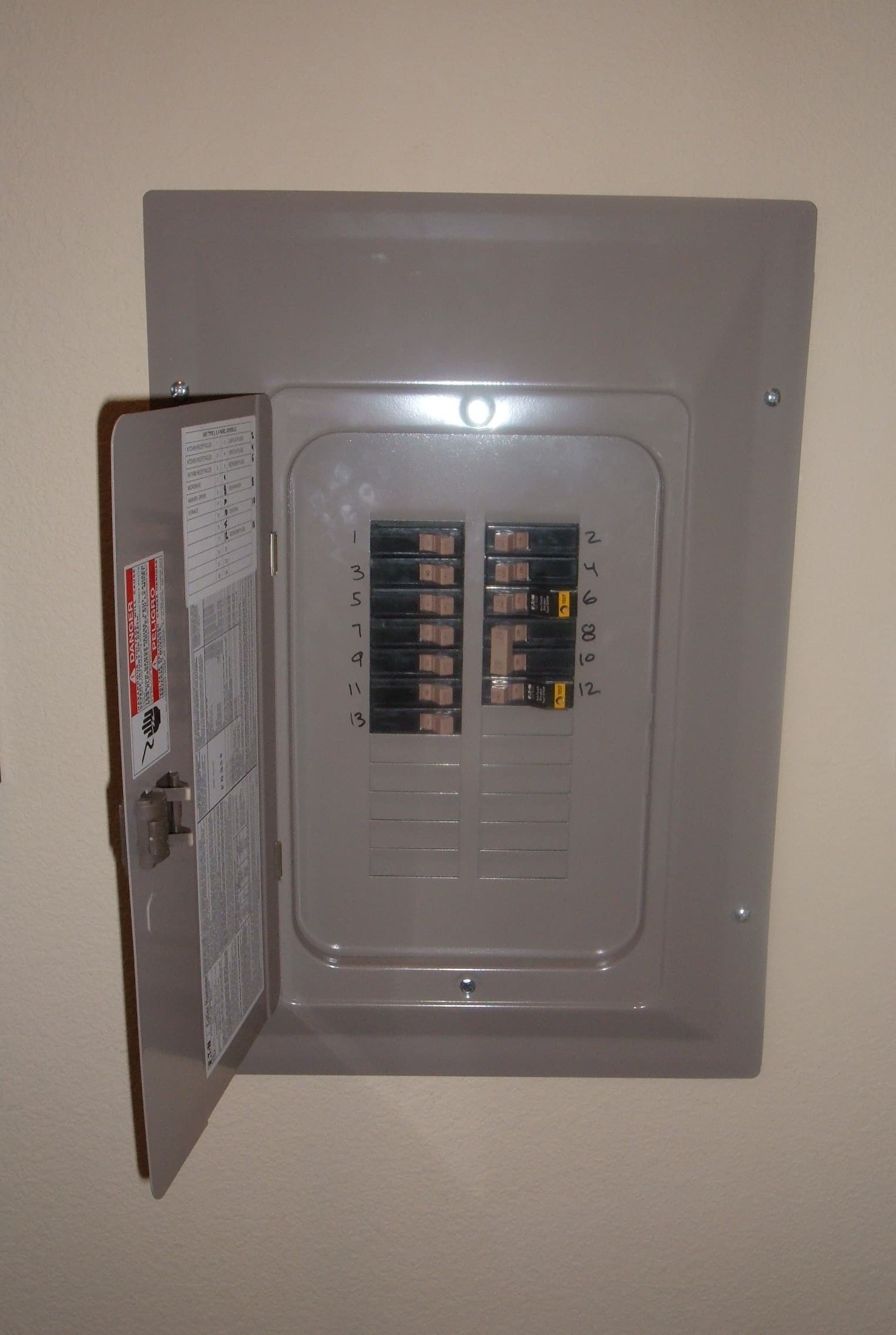
Contractors do not read AS/NZS 3000:2018 the way a student does. A student starts at clause 1.1 and hopes the exam is kind. A contractor opens the book because a switchboard in a 1978 brick veneer has no room for another RCD, the builder has already tiled the wet area, and someone has to decide whether the existing earth electrode can be reused. The Wiring Rules are written for that moment. They are also written for the later moment, when an inspector or a claims assessor asks whether the work complied.
This is not a clause-by-clause commentary. Those exist, and the only one that matters in a dispute is the standard itself, including its amendments. This is a contractor's account of how the document is actually used on a job: which parts you live in, what the amendments changed, why Part 1 and Part 2 are not the same kind of rule, how the certificate attaches to the tests, and when 3000 is not the only document on the bench.
How the book is used on a job, not in a classroom
The current Wiring Rules are AS/NZS 3000:2018, Electrical installations, known as the Australian/New Zealand Wiring Rules. Amendment 1 (January 2020), Amendment 2 (April 2021) and Amendment 3 (May 2023) are part of that edition. If your copy stops at the 2018 cover and has no amendment pages, it is not a current copy. Standards Australia sells the consolidated text. Using an old extract because it is already highlighted is a choice you will have to explain.
State and territory electrical safety law is what makes the standard compulsory. Energy Safe Victoria, the Electrical Safety Office in Queensland, NSW Fair Trading and Building Commission NSW, the South Australian Office of the Technical Regulator, WA Building and Energy, TAS CBOS, Access Canberra and NT WorkSafe each adopt the Wiring Rules through their Act and regulations. They do not adopt the National Electrical Code, and they do not adopt a contractor's memory of "what we used to do on the Gold Coast". The licence you hold is the authority to do the work. The Wiring Rules are the technical law of that work.
On a typical residential alteration the contractor lives in a handful of places: Section 1 for definitions and the fundamental principles; Section 2 for switchboards, protection and control; Section 3 for selection and installation of wiring systems; Section 4 for appliances, accessories and equipment; Section 5 for earthing; Section 6 for damp situations and the other special locations; and Section 8 for verification. The appendices are not decoration. Appendix C, on circuit protection and cable selection, is where a lot of arguments about "it will be right, it's only a short run" go to die.
The practical sequence on site is not the sequence of the book. You isolate. You identify what is existing and what you are changing. You decide whether the existing installation has to be brought up, in whole or in part, because you have altered it. You select protection and cable. You install. You test. You certify. The Wiring Rules have something to say at each of those steps. Skipping the test because the circuit "worked when I turned it on" is not a solution under Part 2. It is a failure of Section 8.
Amendments are not optional errata
Amendment 1 tightened and clarified a set of 2018 clauses that the industry had already started arguing about, including residual current device requirements and some installation practices that had been read more loosely than the committee intended. Amendment 2 continued that work. Amendment 3, published 19 May 2023, touches definitions, protection, switchboards, wiring systems, equipment and the appendices — including clauses in 1.4, 1.5, 2.5, 2.10, 3.4, 3.8, 3.9, 3.15, 4.4 and 4.13, and Appendices A and C. You do not need to memorise the clause list. You do need a text that includes them.
The contractor's habit of "I know 3000" is the habit that Amendment 3 was written to disturb. Switchboard construction, arc fault considerations, wiring system support, and the interface with other standards have all moved since the 2018 launch. If your verification sheet still looks like a 2007 megger-and-polarity card, update the sheet to the current Section 8, then do the tests the sheet describes.
Regulators publish guidance when an amendment is causing site-level confusion. They do not publish a licence to ignore the amendment until you have time to buy a new book.
Fundamental principles and the solutions in Part 2
AS/NZS 3000 is built as two methods of compliance.
Part 1 states the fundamental safety principles. Protection against electric shock, protection against thermal effects, protection against overcurrent, protection against earth fault, protection against voltage disturbance, isolation, and the requirement that the installation be fit for its intended use — those are duties, not suggestions. They apply to every electrical installation the standard covers.
Part 2 sets out installation practices that are deemed to comply with Part 1. That is the contractor's everyday path. If you select and install in accordance with Part 2, you are entitled to treat the installation as complying with the principles, provided you have also verified it. Most domestic and small commercial work should stay on that path. It is repeatable, it is what inspectors expect to see, and it is what your certificate is usually asserting.
Part 1 remains available as a design path when Part 2 does not fit. That is not a loophole for a cheaper board. It is an engineered solution that has to be documented, justified against the principles, and still verified. A contractor who writes "Part 1 solution" on a docket because the existing enclosure will not accept the required RCD arrangement has not designed anything. They have declined to comply. If you need a Part 1 solution, involve a person who can take responsibility for the design — often that is a licensed electrical engineer, and in some cases it will also engage the inspection pathway for prescribed work.
The distinction matters on alteration work. Part 2 does not require you to rebuild a whole house because you added a circuit. It does require the work you did, and the parts of the existing installation affected by that work, to comply. Clause 1.9 and the alteration and repair provisions are where contractors either become careful or become defendants. Like-for-like replacement of a failed accessory is not the same as altering the wiring configuration. If you change the protection, the earthing arrangement, the load, or the environment, you have left the repair box.
Certificates of compliance are how the standard leaves the site
The Wiring Rules require verification. The state Acts require a certificate. Those are not two hobbies. The certificate is the legal statement that the tests in Section 8 were done and that the installation (or the altered part of it) complies.
The name of the paper changes. Victoria uses the Certificate of Electrical Safety, purchased and lodged through Energy Safe Victoria, with prescribed work inspected by a Licensed Electrical Inspector before energisation. New South Wales uses the Certificate of Compliance for Electrical Work, now lodged through the Building Commission NSW eCert portal — handwritten and PDF forms are being removed from the system, so check the current rule before you leave a job without a lodgement. Queensland requires the electrical contractor to test and to complete the required notice or certificate under the Electrical Safety Act 2002. South Australia's Office of the Technical Regulator administers the electronic certificate of compliance. WA Building and Energy requires the electrical safety certificate. TAS CBOS, Access Canberra and NT WorkSafe each have their own CoC. The Northern Territory's Electrical Safety Act 2022 widened the duty; a later amendment carved out some like-for-like replacements. Read the current NT WorkSafe bulletin, not a text from 2023.
What does not change is the content the certificate is standing on: visual inspection, continuity of the earthing system, insulation resistance, polarity, correct circuit connections, and RCD testing where an RCD has been installed or replaced. NSW's Gas and Electricity (Consumer Safety) Regulation is unusually explicit that an installation must not be energised until those matters have been established. Other jurisdictions reach the same result through their own regulations and through Section 8 itself.
A certificate that is filled in at the kitchen table on Sunday, for a job that was never meggered, is a false document. It is also the document a lawyer will hand to a coroner. The licensing hub exists in part because this is how contractors lose the ticket they spent an apprenticeship earning.
Do not skip a test because the circuit is short, because you have done a hundred like it, or because the builder is waiting with the plasterer. If you cannot test, you cannot certify, and if you cannot certify you cannot lawfully leave the work energised.
When 3000 is not the only document
AS/NZS 3000 is the general installation standard. It is not a complete library.
AS/NZS 3012, Electrical installations — Construction and demolition sites, applies when you are supplying a site, not a finished building. Construction wiring, switchboards, socket-outlet protection, and the inspection regime on a building site are 3012 problems first. Applying domestic Part 2 practice to a multi-storey frame and calling it done is how site sheds get condemned.
AS/NZS 3008.1, Electrical installations — Selection of cables, is the cable selection method the Wiring Rules point to. Voltage drop, current-carrying capacity, and installation conditions are not a matter of "4 mm² will be right, it's only a hot-water unit". 3008 is where the calculation lives. If you are not using it, you are guessing, and guessing is not a Part 2 solution.
AS/NZS 4777, particularly 4777.1 for installation of grid-connected inverters and 4777.2 for inverter requirements, sits on every rooftop PV and most battery jobs. The Wiring Rules still apply to the switchboard, the earthing, the isolation and the wiring system. 4777 applies to the inverter energy system. Treating a hybrid inverter as if it were a rangehood is how islanding, residual-current and shutdown requirements get missed. CEC accreditation and the SAA scheme do not replace 4777, and they do not replace 3000.
The National Construction Code applies to the building. Electrical contractors meet it at smoke alarms, at energy efficiency for lighting and appliances, at condensation and bushfire provisions that change where equipment may be mounted, and at the interface with plumbing and gas. The NCC does not authorise you to ignore the Wiring Rules. It adds duties that 3000 never tried to carry.
Other documents arrive depending on the job: AS/NZS 3001 for transportable structures and vehicles, AS/NZS 3002 for shows and carnivals, AS/NZS 3003 for patient areas, AS/NZS 3004 for marinas, AS/NZS 5033 for PV arrays (until its successor fully takes the field — check the current citation), AS/NZS 5139 for battery energy storage, AS/NZS 4836 for safe working on or near low-voltage electrical installations, and AS/NZS 3760 for in-service testing of electrical equipment. Manufacturer instructions are part of the installation standard's own requirement that equipment be installed as intended. A contractor who bins the inverter manual because "3000 doesn't mention that model" has misread both documents.
Network distributor rules sit beside all of this. Service fusing, meter isolation, embedded generation export limits, and the point of supply are not Wiring Rules questions even when they look like them. The distributor's service and installation rules, and the connection agreement, have to be read for that job in that street.
What "live with it" actually means
Living with the Wiring Rules means keeping a current copy — electronic is fine if you can show it — and opening it when the job is not a reprint of the last one. It means writing the tests down. It means knowing when you have left Part 2 and need a design. It means knowing when 3012, 3008, 4777 or the NCC has entered the room.
It also means refusing the invitation to treat the standard as a vibe. "It's close enough to 3000" is not a clause. "The last inspector didn't care" is not a clause. "We'll get it compliant when they paint" is not a verification method.
The contractors who stay out of trouble are not the ones who can recite clause numbers at a barbecue. They are the ones who, on a wet Thursday in a roof space in Ballarat or Townsville, still do the insulation resistance test, still confirm the main earthing conductor is what they think it is, and still decline to energise a board that will not accept the required protective devices. The standard is written to support that refusal. Use it that way.
A practical Wiring Rules checklist for the job in front of you
- Confirm you are working to AS/NZS 3000:2018 including Amendments 1, 2 and 3, as adopted by the state or territory you are standing in.
- Identify the work as new work, alteration or repair, and apply the alteration rules; do not stretch "like-for-like" over a changed load or a changed board.
- Stay on the Part 2 path unless you have a documented Part 1 design and a person who will sign for it.
- Select cables using AS/NZS 3008.1, not habit. Check voltage drop and installation conditions, not just breaker size.
- Apply Section 2 to the switchboard you are actually leaving behind, including RCD requirements for the circuits you have touched.
- Apply Section 5 to earthing and bonding as they exist after your work, not as they were drawn in 1984.
- Open Section 6 when the location is damp, outdoors, a special installation, or anything you would not put a toaster in.
- If the site is under construction, apply AS/NZS 3012 to the construction supply. If the job is PV or battery, apply AS/NZS 4777 and the array and battery standards as well.
- Check the NCC and the distributor's rules for the parts they own: smoke alarms, energy provisions, service head, export.
- Isolate. Test for dead. Complete the Section 8 tests that apply. Record the results.
- Complete the local certificate — COES, CCEW, eCoC or the local CoC — and lodge it in the way the regulator currently requires.
- Do not energise, and do not hand the keys over, until the tests and the certificate can both be stood behind.
The Wiring Rules will not make a poor installation look good. They will, if you use them, stop a competent contractor from leaving a poor installation because the afternoon got away from them.
Questions contractors ask
- Which edition of AS/NZS 3000 do I have to work to?
- The current edition is AS/NZS 3000:2018, including Amendments 1, 2 and 3. Amendment 3 was published in May 2023 and is consolidated into the current text. Your state or territory electrical safety law adopts the Wiring Rules; work to the adopted edition and amendments, not to a photocopied 2007 extract in the glovebox.
- Is complying with Part 2 of the Wiring Rules always enough?
- Part 2 is the deemed-to-comply installation practice. It is the path most contracting work takes. Part 1 sets the fundamental safety principles, and some designs rely on those principles with documented engineering. Either path still has to be tested, and the certificate still has to say the installation is safe. Related standards such as AS/NZS 3012, AS/NZS 3008 and AS/NZS 4777 are not optional extras when they apply.
- Do I still need a certificate if the work is a small alteration?
- Usually yes. Jurisdictions differ on like-for-like replacements, but additions, alterations, new circuits and switchboard work almost always need a certificate of compliance and the tests in Section 8. Check the local regulator — Energy Safe Victoria, the Electrical Safety Office, NSW Fair Trading and Building Commission NSW, SA OTR, WA Building and Energy, TAS CBOS, Access Canberra or NT WorkSafe — rather than assuming a small job is informal.