Commercial & industrialUpdated 15 September 20269 min read
Industrial maintenance contracts: what to watch before you sign
A cheap monthly fee looks like steady work until the first after-hours isolation, the first missing spare, and the first argument about who locked the board. Read the contract as an electrician, not as an optimist, and decide what you are actually selling.
By Meredith Keane
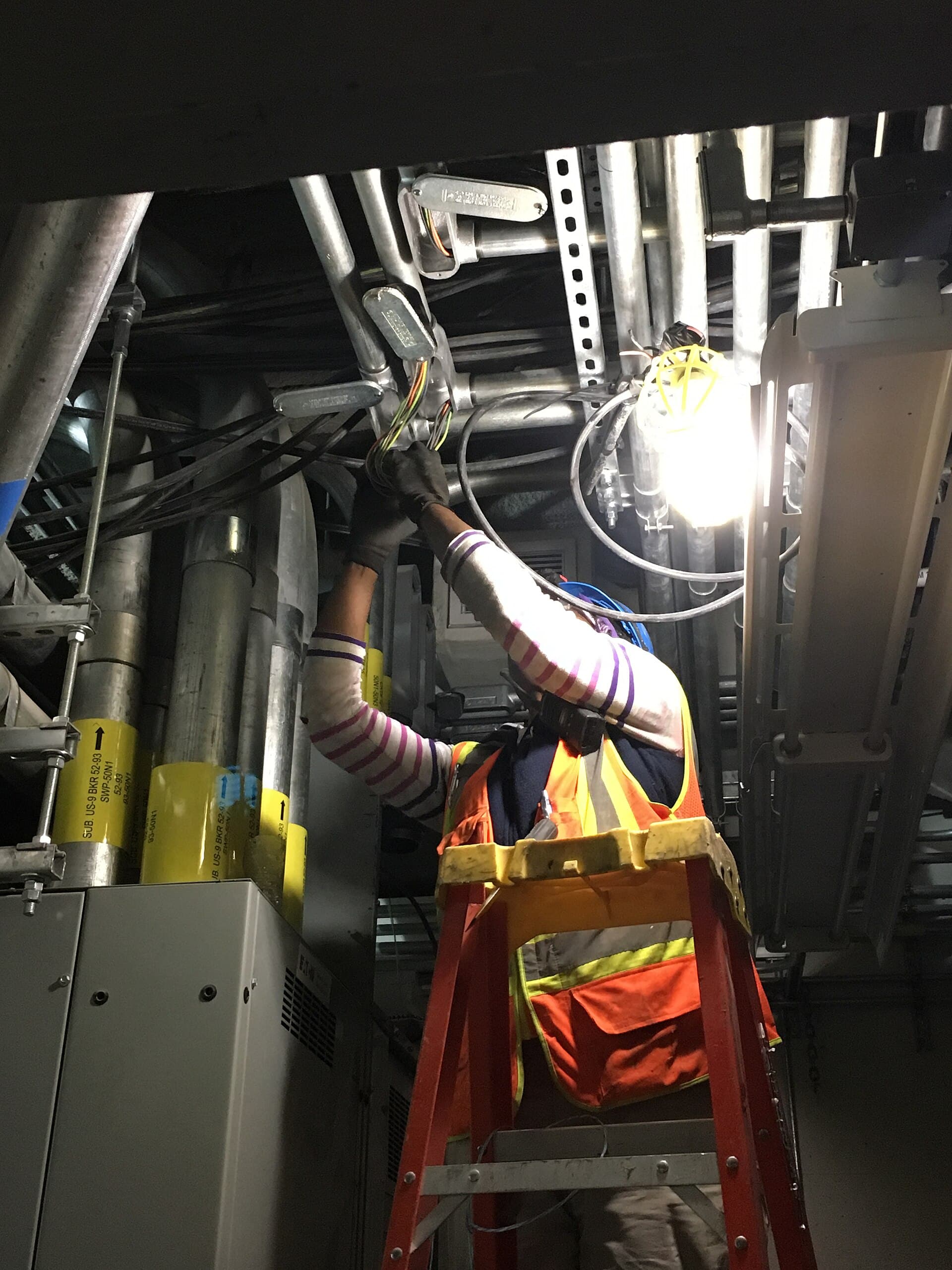
Industrial maintenance money looks like grown-up contracting. A monthly fee, a site induction, a set of keys, and a phone that rings when a conveyor stops at 9pm. It can be good work. It can also be the way a one-van firm buys a second job that never clocks off, at a rate that would not cover a single isolation if you costed it honestly.
The contract is the job. The board is only where the contract becomes real. Before you sign, read the document as if the first call-out will be a wet Sunday on a site you have visited twice. Then decide whether the fee still looks like a fee.
This sits with the rest of the commercial and industrial desk because the technical work is ordinary industrial electrical work. The commercial risk is not ordinary unless you make it so.
Call-out versus planned work
Those are two products. A contract that blurs them will be interpreted, every time, in the client’s favour.
Planned work is the inspection, the thermal scan, the RCD test, the tightening schedule, the spare that is replaced before it fails, the light that is changed on a Tuesday when the line is down for production reasons. You can staff it. You can write a SWMS that matches the task. You can bring the right parts.
Call-out work is the failed motor, the burnt isolator, the mysterious earth fault, the “it just stopped” at the hour when the only person who knows the plant is on leave. It needs a response time you have actually agreed, a competence you actually have, and a rate that includes travel, isolation, diagnosis and the fact that you will not be on another paying job while you do it.
A retainer can cover planned work and a discounted call-out rate. A retainer that is expected to swallow unlimited breakdowns is not a retainer. It is a subsidy.
Write the inclusions as a list of tasks and frequencies, not as “keep the plant running”. Keeping the plant running is the client’s hope. It is not a scope.
Write the response. “We’ll do our best” is not a response. “Four hours, on-site, for a licensed electrician, 7am to 3pm weekdays; after-hours by agreement at the stated rates” is a response. If you cannot meet it, do not offer it. A liquidated-damages clause attached to a fantasy response time is how a cheap fee becomes an expensive letter from their solicitor.
Isolation responsibility is the clause that matters at 2am
Isolation and lockout on an industrial site is rarely a matter of your personal padlock alone. There is a permit. There is a board of keys. There is a production supervisor who wants the line back. There is a mechanical fitter who has already taken a guard off. There is, sometimes, a second electrical contractor who left a note in 2019.
The contract must say who initiates a permit, who may apply an electrical isolation, who holds the locks, and what happens when the plant cannot be isolated because “we have to keep the other half running”. If the client’s system is weak, your price must include the time to make isolation real, not the time to sign their permit and hope.
AS/NZS 4836 and AS/NZS 3000 do not stand down because a contract says the client will make the area safe. You still test for dead. You still treat a board as live until you have proved otherwise. A sentence in a maintenance agreement does not override WHS law in the state you are standing in, and it does not override your licence.
If the site uses a group lock box, learn it before the first night call. If they do not have one, decide whether you will work there at all after hours. A single worker isolating a three-phase board in a factory they do not know, with no second person and no drawing, is not a heroic extra. It is a foreseeable incident.
Write down whether live work is prohibited — it should be — and what happens if the client asks for it anyway. “No” is an acceptable contract position. It is also the only defensible one in most Australian jurisdictions.
Spare parts: whose shelf, whose money
Factories want you to carry their quirks in your van. Soft starters from a brand you do not use, a discontinued contactor, a special lamp, a proprietary sensor with a twelve-week lead time. A cheap monthly fee that silently includes “and whatever parts you have” will empty your shelves into their plant.
List the strategic spares. Decide who owns them. If they sit in your workshop, the contract should say they are reserved for that site and that the client pays to replenish them. If they sit on their site, the contract should say who checks them and what happens when the stores person has used the last overload “just for a minute”.
Consumables — glands, ferrules, a metre of 4mm, a handful of DIN rail — are ordinary. A replacement variable-speed drive is not a consumable. Do not let a site manager treat it as one.
Obsolete equipment is a conversation for the planned side of the contract. If a board is full of gear you cannot buy tomorrow, the maintenance agreement should include a replacement plan, not a shrug. The shrug becomes your problem the night it fails.
After-hours competence
The person who attends at night must be able to do the work you promised. That is not always the apprentice who is closest to the site, and it is not always you after a twelve-hour day.
Competence here means: licensed for the work in that state; inducted on that site; able to isolate that plant; able to say they cannot and leave it safe. A restricted licence that covers disconnect-reconnect of a like-for-like motor may not cover a board alteration you discover you need at 11pm. Stop. Make safe. Come back under a proper scope.
Fatigue is a WHS issue. A contract that implies you are on a roster of one, forever, is a contract that will eventually send a tired person into a live board. Build a backup — another licensed contractor with a subcontract, a second employee, or a written right to defer non-dangerous faults to the morning. Production pressure is not an emergency just because a supervisor raises their voice.
If the site has high-risk plant, confined spaces, overhead cranes or a dangerous-goods store, after-hours work may need a second person regardless of how simple the electrical fault sounded on the phone. Write that. Price that.
Insurance, licences and the client’s piece of paper
Your electrical contractor licence, your workers’ compensation, your public liability and your tools cover are not decorations. Clients will ask for certificates of currency. They will ask for the contractor licence number. They will ask, sometimes, for professional indemnity if you are also offering opinions about the condition of the plant.
Give them current documents. Do not let a contract require coverage you do not have. Do not sign an indemnity that makes you responsible for the client’s plant, their production losses, and their previous contractor’s defects, for a monthly fee that would not buy a week of their downtime.
Read the consequential-loss clause. If they want you to wear lost production, the rate is not a maintenance rate. It is an insurance premium, and you are not an insurer.
Confirm that the work is in the states your licence covers. A factory group with a site over the border is a licensing problem, not a travel problem. State licences do not travel as freely as a van.
Permit systems, inductions and the quiet defects
A decent industrial site will not let you start because you know the owner. You will do a general induction, a site induction, perhaps a high-risk licence check, and a permit for the task. Budget the time. A two-hour job with a one-hour permit process is a three-hour job.
The permit is only as good as the isolation it describes. If the permit says “electrical isolation by contractor” and the drawing is wrong, you are the person who finds out. Walk the isolation points in daylight before you agree to night work.
Quiet defects are the ones you will be assumed to have accepted. A missing shroud, a damaged incoming cable, a MEN that looks like a history of the site. The first planned inspection should produce a defect list with priorities. The contract should say what you do with defects that are outside the monthly fee — quote them, or refuse to keep attending until they are fixed. Silence is how a missing shroud becomes “your board” in their memory.
Thermal imaging, insulation resistance trends and a simple log of trips are more valuable than a vague promise to “keep an eye on it”. Give the client a one-page report after planned visits. Keep a copy. The report is how you prove you were maintaining, not just attending.
When the cheap monthly fee is a trap
The fee is a trap when any of the following are true.
It was priced against last year’s quiet period, not against the plant as it is.
It includes call-outs, parts and after-hours in a single number that looked attractive in a meeting.
The site is an hour from your yard and the response time assumes you live next door.
The plant is a mix of obsolete European gear and homemade modifications, and nobody has a drawing.
The client wants a named technician and also wants that person available every public holiday.
The indemnity is broader than your insurance.
You have not walked the main switchboard with the cover off.
You will be the only licensed person they call, and they have three shifts.
If several of those apply, either raise the fee, narrow the scope, or leave the work on the table. There is no prize for being the cheapest name on a factory’s fridge magnet.
A better shape, for most small contractors, is a planned-maintenance schedule at a monthly or quarterly fee, plus call-outs at published rates, plus a spare-parts agreement, plus a written after-hours arrangement that may be “we do not offer it”. That last sentence loses some tenders. It also loses fewer sleeps.
Do not invent a tender threshold or a “typical” industrial rate and treat it as a rule. Rates move. Awards move. Check the current Electrical, Electronic and Communications Contracting Award and Fair Work if you are employing people to service the contract. The award is not a substitute for a commercial rate; it is a floor under the labour you are selling.
What good looks like after twelve months
You know the main board, the MEN, the incoming service and the plant that actually stops production. You have a defect list that is shorter than it was. You have not been asked to work live. Your invoices for call-outs have been paid because they matched the contract. The client has a folder of certificates, test results and the one-page visit reports. Your insurer has not heard from the site.
That is a maintenance contract. The other kind is a retainer that buys the client a 24-hour electrician at café prices. Do not sign the other kind because you are afraid of an empty Tuesday.
Three-phase work on small commercial sites is often how these relationships start — one oven, one compressor, then a request to “look after the place”. Treat the second conversation as a new job with a new price.
Before you sign: a contract checklist
- Split planned tasks from call-outs. List frequencies. List response times you can meet.
- Price after-hours separately, or decline it in writing.
- Write who isolates, who holds locks, and that you will still test for dead.
- Prohibit live work. Say what you will do if they ask.
- List strategic spares, who owns them, and who pays to replace them.
- Match insurance and contractor licensing to the site, including any interstate plant.
- Walk the main board and the worst piece of plant before you agree a fee.
- Issue a defect list after the first planned visit. Do not inherit quiet defects in silence.
- Keep visit reports, certificates and test results in a file the client can be given.
- Check current award obligations with Fair Work if employees will deliver the work.
A signature is easy. An isolation at midnight is not. Make the paper do the work before the plant does.
Questions contractors ask
- Is a cheap monthly retainer a good way to keep a factory client?
- It is a good way to keep a client if the retainer buys a defined set of planned tasks and a defined response, and if call-outs are extra. It is a trap if the fee is expected to cover every breakdown, every after-hours attendance and every spare you happen to have in the van. Write the inclusions. Then price the exclusions as if they will happen on a Sunday.
- Who should own isolation on a contracted site?
- The site’s permit and lockout system owns the process. Your licensed worker owns the electrical isolation they apply and the tests that prove it. A contract that says “the client will isolate” is not a permission for you to start work on a board you have not proved dead. See the isolation piece on this site and AS/NZS 4836.
- Do I need extra insurance for after-hours industrial call-outs?
- You need the insurance you actually have to match the work you actually do — public liability, products, and whatever your state contractor licence and the client’s induction require. After-hours work does not create a new class of physics, but it does create a new class of claim if an unsupervised or tired worker makes a hole in a production line. Ask your broker, in writing, whether the policy contemplates that site and that hour.