Solar & renewablesUpdated 29 September 20268 min read
Inverter and switchboard changes when PV lands on an old board
A rooftop array does not make a 1960s fuse box solar-ready. This article covers the main switch, inverter isolators, generation labelling, busbar limits, meter isolation, and the point at which a PV job is honestly a board upgrade.
By Meredith Keane
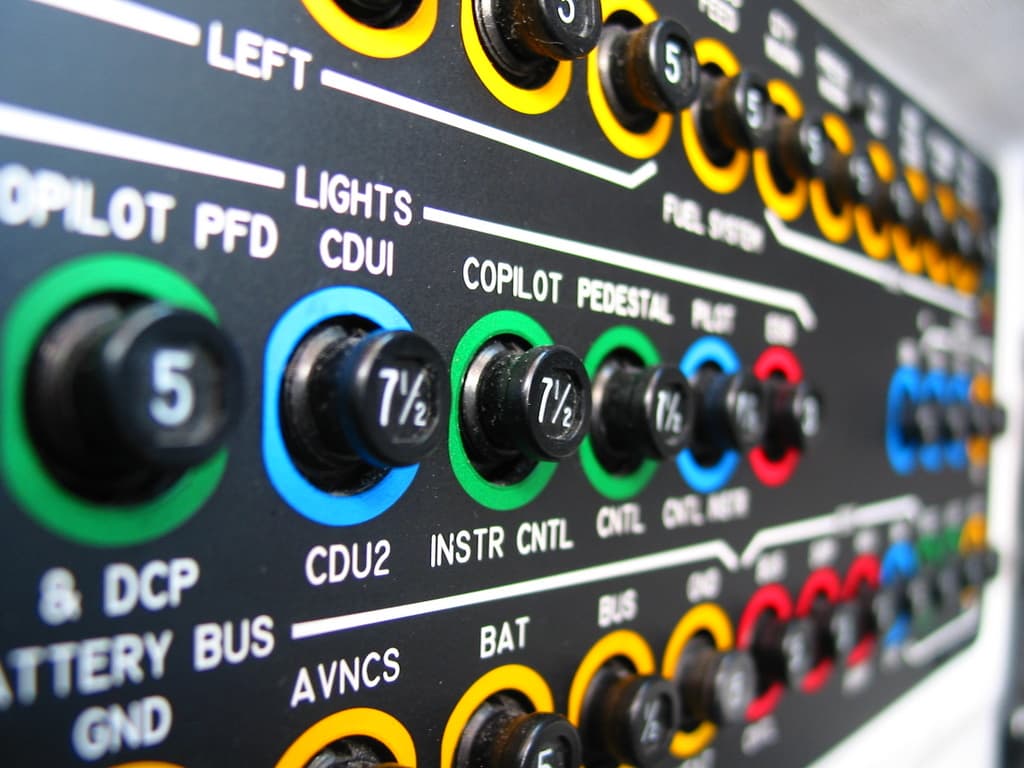
The sales photo is the roof. The technical argument is the switchboard. A 5 kW inverter on a porcelain fuse chassis with no spare ways, no generation label and a MEN that lives under a DNSP seal is not a PV installation. It is a request for a switchboard upgrade that someone tried to avoid.
This article sits in solar and renewables but it is board work. AS/NZS 3000, AS/NZS 4777, the distributor's service rules, and the same asbestos and meter-isolation problems as any domestic upgrade all apply. For the Wiring Rules frame, see AS/NZS 3000 for contractors. For the rest of the solar job, see rooftop solar contractor responsibilities.
Do not skip earthing, RCDs or certification to land an inverter "temporarily". Temporary generation is how inspectors write the same defects every season.
The main switch is two ideas
One handle for the network, one for the inverter
The installation already has a main switch that isolates the consumer installation from the network. PV adds a main switch (inverter supply) that isolates the inverter from the installation. They are not the same handle. They must both exist, be lockable where required, and be labelled so that a stranger can tell which is which.
On an old board the first problem is space. The second is identity. A single rewirable carrier marked "MAIN" with the inverter landed on a spare fuseway is not an inverter supply switch. A circuit breaker jammed in a fuse holder is not a generation connection.
If you replace the board, you can design the incoming main switch, the inverter supply switch, and any battery or generator switches as a coherent isolation row. If you do not replace the board, you must still achieve that coherence. Often you cannot. That is the conversation to have before the array is on the roof, not after.
The main switch must isolate what the label claims. Inverters, backup bars and uncontrolled parallel paths make liars out of old labels. Test it.
Inverter isolators, adjacent and DC-rated
AS/NZS 4777 and the inverter manual want AC isolation adjacent to the inverter, in addition to the switchboard device. Adjacent means the person operating the isolator can see the inverter, not that the isolator is on the same title. A laundry inverter and a meter-box isolator on the street frontage fail that idea.
DC isolation belongs on the DC side, DC-rated, oriented against the weather, labelled as part of the shutdown sequence. None of this is cancelled because the inverter has an internal disconnect. Internal devices are extra. They are not the field isolator the firefighter is looking for.
Route the AC from inverter to board as a dedicated generation circuit, sized for the inverter output, mechanically protected, and not shared with a lighting loop. Voltage drop and grouping still use AS/NZS 3008. A long run from a rear garage inverter to a front board is a calculation, not a drum of 2.5 mm².
Generation labelling on two panels
Many older homes have a network meter panel and a remote distribution board. Generation labels need to tell the truth on both. A shutdown poster at the inverter, a generation sticker at the meter, and a circuit schedule at the consumer board should use the same words for the same switches.
Include: generation present, shutdown order, identification of the inverter supply switch, PV isolator identities, and any battery or backup that can keep circuits live. If the meter panel is the first thing emergency services open, it cannot look like a 1980s single-supply dwelling.
Durable labels. Matching names. No leftover "solar dummy" stickers from a previous quote. If you upgraded the board, photograph the as-built labels into the handover pack.
Busbar limits and the current that does not care about marketing
The busbar and the consumer mains have to carry load current and generation current without exceeding their ratings. An export limit is a network conversation. It does not shrink the inverter's output into the board when the house is importing nothing and the array is at full chat, or when the house is on full load and the inverter is also contributing.
Assess:
- inverter rated current
- existing maximum demand
- consumer mains size and condition
- service fuse and DNSP capacity
- board busbar rating and fault rating
- whether the inverter connection is at the correct point (not on the end of a skinny subcircuit)
If the numbers do not work, you change the inverter, the board, the mains, or the job. You do not write "export limited to 5 kW" on a form and land a 10 kW unit on a 63 A fuse chassis.
Three-phase boards with a single-phase inverter create imbalance and a favourite way to overload one bar. Follow the network rule on phase assignment. Do not pick the phase that had a spare way if that phase is already the air-conditioner.
Meter isolation and the DNSP
PV usually needs a metering change: bi-directional metering, maybe a new meter, maybe a reprogramming. That work is the retailer and the DNSP, not a bonus task for the solar sparky. Your job is to apply, to prepare a board they can meter, and to isolate on the consumer side when they ask.
If the board must move — because the existing meter panel is the only enclosure and it cannot accept generation devices — you are in a full upgrade. Isolation of the service and the meter follows that DNSP's process. Generation approval and isolation requests should be sequenced so you are not standing in a driveway with an inverter and no fuse pulled.
Do not break seals. Do not relocate a meter onto your new chassis unless the network has told you to prepare that arrangement. Do not assume a solar application is permission to alter network equipment.
Different distributors — Ausgrid, Endeavour, Essential, Energex, Ergon, the Victorian businesses, SAPN, Western Power, Horizon, TasNetworks, Evoenergy, Power and Water — publish different service and installation rules. The address picks the rule.
When the PV job becomes a board upgrade
Become honest early. The PV job is a board upgrade when any of the following is true:
- The existing enclosure cannot accept a lockable main switch (inverter supply) and the required protective devices.
- There is no lawful MEN at the main board, or the MEN would be lost if you alter the meter panel.
- The backing is unidentified asbestos-cement and the work would disturb it.
- The busbar, chassis or consumer mains cannot carry the assessed currents.
- Final subcircuits you must disturb cannot be given the RCD protection AS/NZS 3000 requires.
- There is no space for durable generation labelling and a readable schedule.
- The board is already unsafe — exposed live parts, burnt neutrals, missing earth — independent of solar.
- A battery or backup bar is part of the same visit.
Price it as one job. A cheap PV quote that becomes a surprise board in week three is how licence holders lose the argument with the sales desk and then lose the inspection. Show the owner the photographs of the existing board in the quote.
If they refuse the upgrade, refuse the generation connection. You can decline work. You cannot lawfully connect an inverter to an installation you know cannot accept it.
Construction sequence that does not leave a live mess
- Assess demand, board, mains, asbestos, MEN and DNSP constraints. Write the scope.
- Lodge generation and isolation applications.
- Photograph existing.
- Isolate on the consumer side; wait for or perform network isolation only as authorised.
- Build the new board or the lawful generation section. MEN, main earth, main switch, inverter supply switch, RCDs.
- Land the inverter AC on its dedicated circuit. Fit adjacent isolators.
- Label before commissioning, not after the owner has generation and has lost interest.
- Commission export settings to the offer. Test isolation both ways.
- Photograph as-built. Certificate. Handover with a shutdown walk-through.
Do not leave the old fuse box as a live junction with the inverter tails in it. Do not leave two MEN links. Do not leave the old main switch in parallel. Convert or remove. The solar crew's afternoon is not a reason to skip the part that makes the board a single installation.
Batteries, EV chargers and the crowded chassis
The same board is now being asked to accept PV, a hybrid backup bar, and sometimes a Mode 3 charger. Treat each as a source or a large load with its own isolation and current. A chassis that could just accept a 5 kW inverter will not accept that inverter, a battery port and a 32 A charger. Design the enclosure for the equipment that is actually coming, or admit you need a larger assembly.
Backup bars change the meaning of "dead when the main switch is off". Labels must say so. MEN during islanding must be designed. That is battery work, not a spare way.
Job-site checklist
- Assess the existing board as a generation connection: MEN, asbestos, busbar, mains, space, RCDs.
- Decide, in writing, whether this is a PV connection or a board upgrade. Do not hide the decision.
- Lodge DNSP generation and metering applications. Do not touch network equipment outside their rules.
- Provide a lockable main switch (inverter supply), adjacent inverter AC isolation, and DC-rated DC isolation.
- Size the generation circuit and check busbar and mains currents. Export limits are not a busbar waiver.
- Label meter panel, consumer board and inverter with the same shutdown words.
- Remove or convert the old enclosure so it is not a live parallel board.
- Commission to the network offer. Test that each labelled switch isolates what it names.
- Photograph existing and as-built. Keep tests with the certificate.
- If the owner refuses a required upgrade, do not connect the inverter.
A PV array is allowed to be the visible work. The switchboard is the work that decides whether the array is allowed to be energised. If you cannot make the board lawful, you do not have a solar job. You have a quotation for a board, and a roof that can wait.
Questions contractors ask
- Can I add a lockable inverter supply switch to a rewirable fuse board and leave the rest?
- Only if the board can still provide a lawful generation connection, MEN, fault capacity and space for labelling and isolation. Many rewirable boards cannot. Adding one modern device to a fuse chassis is often how you certify a hybrid hazard. Price the upgrade.
- Who isolates the meter when the board must move for PV?
- The DNSP's service and metering rules for that address. Generation work does not authorise you to pull a meter or operate a network fuse outside those rules. Sequence the solar application and the isolation request.
- Does an export-limited inverter mean I can ignore busbar current?
- No. Export limits constrain what goes back to the network. They do not remove load-side current, inverter output current, or the need to assess the board and consumer mains for the connection you are making.