Residential electricalUpdated 9 September 20269 min read
Smoke alarms: photoelectric, interconnected, and the rules that differ by state
Australia does not have one smoke-alarm rule, and electricians who install the same pack in every state leave rental providers and owner-occupiers exposed. This article sets out hard-wired versus battery work, interconnection, photoelectric versus ionisation, and what a licence holder should refuse to leave undocumented.
By Priya Nair
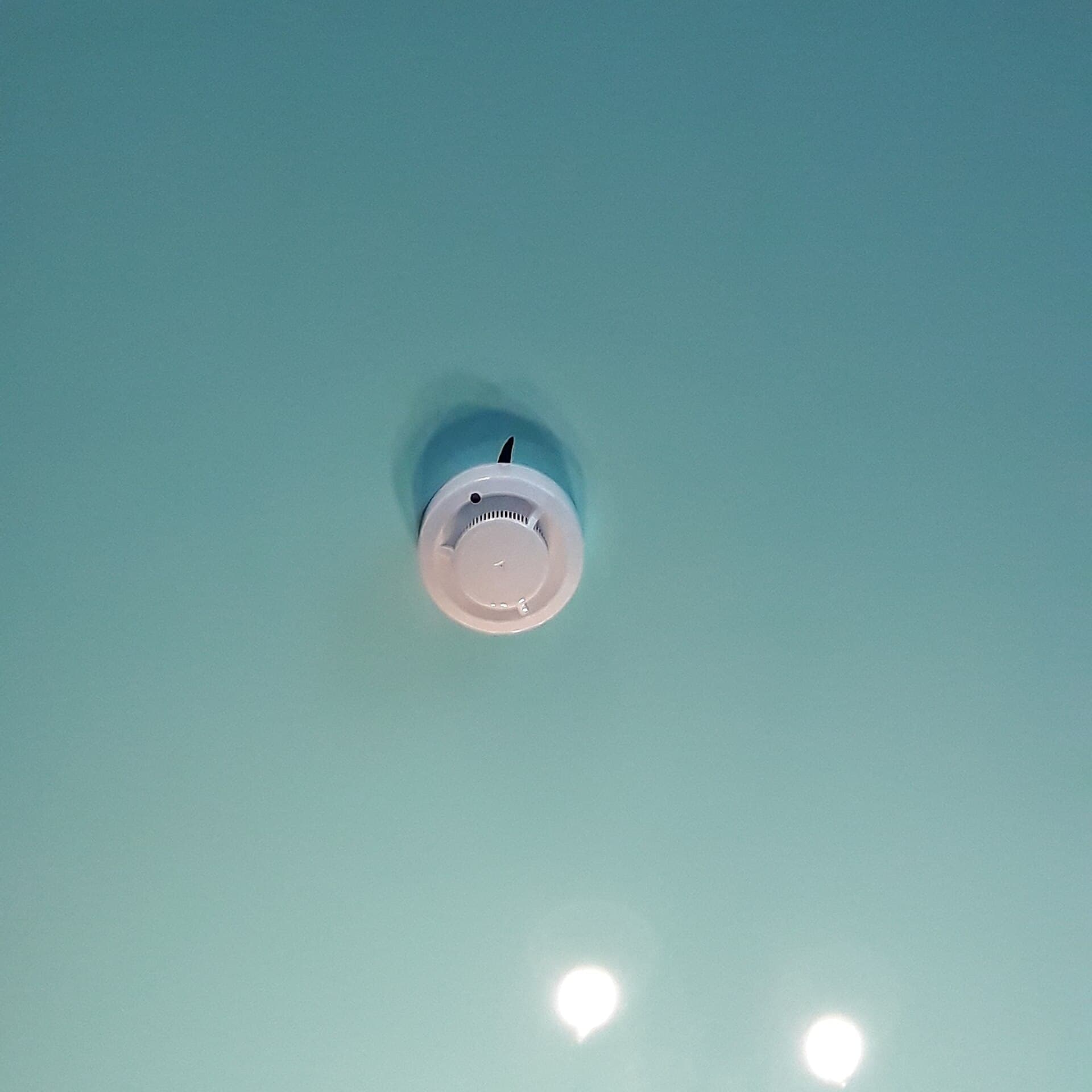
Smoke alarms are the residential job everyone thinks they understand. They are also the job that produces the most confident errors, because the National Construction Code, AS 3786, state fire legislation, and residential tenancy laws do not say the same thing, and they did not start saying it in the same year.
An electrician who fits "the usual hard-wired pair in the hall" in a Brisbane rental, a Perth sale, a Melbourne owner-occupier bungalow and a Darwin donga has not done four versions of the same work. They have applied one habit to four legal systems. The owner will not know. The next inspector might.
This is not a design that skips power, earthing or certification. A 240 V smoke alarm is part of the electrical installation. It needs a lawful circuit, lawful isolation, RCD protection where AS/NZS 3000 requires it for that final subcircuit, and a certificate that matches what is on the ceiling. For the wiring-rules context, see AS/NZS 3000 for contractors.
There is no single Australian smoke-alarm law
Queensland, NSW and the rest are not interchangeable
The NCC sets the baseline for new Class 1 buildings and for work that triggers the current housing provisions: alarms to AS 3786, locations that cover bedrooms and each storey, and interconnection so that one alarm operates the others. Photoelectric is the type the Code path now expects. That is the starting point for new work. It is not a free pass to ignore the state overlay on existing dwellings.
Queensland is the jurisdiction electricians must not bluff. The state ran a staged retrofit: new dwellings first, then dwellings being sold or leased, then the remaining existing stock on a later date. The technical package is photoelectric, interconnected, and either hard-wired or a compliant long-life battery system, with alarms in each bedroom, in hallways that connect bedrooms to the rest of the dwelling, and on each storey. A single hallway ionisation unit from 2009 does not meet that package. If you are quoting a Queensland sale or lease, read the current Queensland Fire Department and QBCC material for that date, not a 2016 toolbox talk.
New South Wales required smoke alarms in dwellings years earlier than some other states, under planning and assessment rules, with locations that cover the path between sleeping areas and the rest of the dwelling and each storey. Tenancy law then layered landlord duties to install and maintain. Photoelectric and interconnection requirements tighten when you are doing new work or when a tenancy rule or a replacement rule says so. NSW is not Queensland, and treating it as Queensland will over-specify some existing owner-occupier jobs and under-specify some rentals.
Victoria requires working smoke alarms in homes and applies the NCC to new building work. Rental minimum standards require landlords to provide and maintain alarms. Photoelectric interconnected systems are the new-build path. Existing rentals are not automatically a Queensland-style whole-house photoelectric retrofit unless a building-work trigger or a current tenancy instrument says so. Check Consumer Affairs Victoria and the Victorian Building Authority path that applies to that occupancy.
Western Australia ties a lot of existing-home duty to sale and lease, with mains-powered alarms where that is reasonably practicable, a ten-year age expectation, and AS 3786. New work follows the NCC. "Reasonably practicable" is not a synonym for "the battery ones were on special". If a spare can be taken from a lighting circuit with lawful wiring, you document why you did or did not hard-wire.
South Australia, Tasmania, the ACT and the Northern Territory each sit on the NCC for new work and then apply their own tenancy and fire instruments to existing homes. Tasmania has had specific director determinations on type and location. The ACT expects alarms in dwellings and maintains a tenancy overlay. The Territory is thinner on whole-of-stock retrofit than Queensland; new work still follows the Code. Do not export a Hobart specification to Alice Springs because it felt thorough.
The point is not that you memorise seven statutes. The point is that you open the current state or territory instrument for the address, you record which trigger applies — new building, alteration, sale, lease, or owner-occupier maintenance — and you install to that trigger. If the agent emailed a generic "smoke alarm compliance" request, you ask which law they mean.
Hard-wired versus battery is a compliance choice, not a price choice
A 240 V alarm with battery backup is the default on new work and on many existing homes where a lighting or dedicated smoke-alarm circuit can be reached. It is part of the electrical installation. It is isolated with the circuit, labelled on the schedule, and tested as a 240 V accessory as well as as a smoke alarm.
A sealed ten-year lithium alarm is lawful in some retrofit paths, notably where a state instrument allows it as an alternative to mains. It is not a licence to hide the units and leave no record. Date of manufacture, location, interconnection method and the occupancy that justified battery instead of mains all belong on the paperwork.
A 9 V user-replaceable alarm is the unit the trade should stop treating as a professional finish. Some existing owner-occupier dwellings still have them. Replacing a dead 9 V disc with another 9 V disc on a rental handover, a sale, or any job where photoelectric interconnection is required is how you inherit the next failed inspection. If the law allows a temporary battery unit, say so and date it. Do not call it done.
Power for hard-wired alarms is not an invitation to tap a bathroom heat-lamp circuit or a shed subcircuit because the cable was close. Follow AS/NZS 3000 for the final subcircuit, RCD protection and isolation. If the house is mid switchboard upgrade, put the smoke-alarm circuit on the new schedule rather than leaving it on a rewirable fuse that nobody can name.
Interconnection means they all go off
Interconnection is the requirement that people skip because the second and third alarms "look installed". Wired interconnection is clean when you are in the ceiling anyway. Radio-frequency interconnection is legitimate when the units are certified for it, paired, and tested as a system. Mixing brands that will not talk, or fitting RF units and never pressing the pairing sequence, is not interconnection.
Test from every alarm. One unit in alarm must operate the others. Write the method — wired or RF — on the certificate. If a bedroom door was shut and the hallway unit is the only one the sleeping occupant will hear, you have not met the point of the rule even if the catalogue says "interconnectable".
Multi-storey dwellings and split-level 1970s houses are where electricians under-count. Each storey needs coverage. A rumpus that is used as a bedroom is a bedroom. A study with a sofa bed that is let on weekends is a sleeping area when you are applying a location rule that says bedrooms. Ask how the rooms are used. Do not accept "it's not a bedroom on the plan" as the end of the conversation if someone sleeps there.
Photoelectric versus ionisation
Photoelectric alarms are better at the slow, smouldering smoke that comes from furnished rooms and electrical faults in bedding and upholstery. Ionisation alarms can be quicker on some fast-flame scenarios and are also the type that nuisance-trips on toast, which is why they get taken down. The NCC path and the state retrofit programs have moved to photoelectric for dwelling work. That is the type you specify unless a current instrument says otherwise.
Dual-sensor units exist. They can be the right product where a manufacturer and the applicable standard support them. They are not a workaround for fitting ionisation because the wholesaler is clearing stock. Do not install ionisation in a jurisdiction or occupancy that requires photoelectric and then argue that "smoke alarm" is a generic term.
Heat alarms have a place in some kitchens and dirty spaces as part of a designed system. They are not a substitute for smoke alarms in bedrooms and hallways. A kitchen renovation is a good moment to sort both the extract and the detection. See kitchen and bathroom electrical renovations for the wet-area and cooking circuits that usually arrive in the same visit.
Rental versus owner-occupier
Tenancy law is why agents ring electricians in October. Landlords must provide and maintain smoke alarms; tenants must not disable them. The electrician's job is not to mediate the bond. It is to install what the current tenancy and fire instruments require, test them, and give the person who engaged you a record that states type, location, interconnection, power source and test result.
Owner-occupiers still have duties. Existing homes in some states needed alarms years ago. New work on an owner-occupier house still triggers the NCC. "I live here and I don't want one in the bedroom" is not a design instruction you can certify. If they refuse a required location, you refuse the certificate for that scope.
Holiday lets, boarding arrangements and family accommodation that is not a straightforward Class 1 owner-occupier can pick up extra fire-safety provisions. If the occupancy is unclear, say so in writing and do not issue a residential smoke-alarm certificate that claims a class of building you have not established.
What electricians should refuse to leave undocumented
The unfinished part of this job is almost always the paperwork and the ceiling you cannot see from the driveway.
Refuse to leave alarms untested because "the painter will fit the last two". Refuse to leave ionisation units on a photoelectric job because the owner will "upgrade later". Refuse to leave RF units in their boxes with a note that the tenant can pair them. Refuse to leave a 240 V circuit unterminated in the roof for a handyman. Refuse to write "smoke alarms installed" on a certificate that does not list locations. Refuse to call a dwelling compliant against a state sale or lease rule when you only attended the hallway.
Document manufacture or expiry dates. Ten-year units that are already eight years old are not a ten-year solution. Document the circuit, the isolator, and whether interconnection is wired or wireless. Photograph the installed locations against a simple floor sketch. The next electrician, the agent and, if it goes badly, the coroner are the audience.
If you find disabled alarms — battery removed, 9 V cell next to the toaster, detector bagged for renovation dust — record that as found and make it safe. A renovation that bagged the alarms and never reinstated them is a defect, not a decorating choice.
Job-site checklist
- Identify the state or territory, the occupancy (owner-occupier, rental, sale, new work) and the instrument that actually applies.
- Confirm required type (photoelectric unless a current instrument says otherwise), power source and interconnection method.
- Count storeys and sleeping rooms as they are used, not only as they are labelled on an old plan.
- Do not install ionisation where photoelectric is required.
- Wire 240 V alarms on a lawful final subcircuit with the RCD protection AS/NZS 3000 requires. Do not tap an unidentified circuit.
- Commission interconnection and test every unit so that one alarm operates all.
- Record locations, serial or batch dates, power source and test results on the certificate.
- Reinstate any alarm disabled for dust or paint. Do not leave bagged detectors.
- Give the person who engaged you a location sketch and the manufacturer’s user information.
- If the client refuses a required location or type, stop and do not certify that scope.
Smoke alarms are cheap compared with the rest of a residential renovation and expensive compared with the excuse that "the state rules are confusing". They are confusing if you want one pack to work everywhere. They are straightforward if you open the instrument for that address, fit photoelectric interconnected units where that instrument requires them, power them lawfully, and leave a record that another licence holder can follow. That is the job. The rest is a hardware-store aisle.
Questions contractors ask
- Can I fit ionisation alarms if the owner says they are cheaper and they already have them?
- Not if the state or territory instrument, the NCC trigger for the work, or the tenancy rule requires photoelectric alarms. Even where ionisation is still legally present in an existing dwelling, replacing like-for-like with ionisation on a professional job is a poor defence when the next inspector asks why you ignored the photoelectric requirement that already applied to that occupancy.
- Do wireless interconnected alarms satisfy the interconnection rule?
- Where the applicable instrument allows radio-frequency interconnection that meets AS 3786 and is commissioned as a system, yes. Fitting units that can interconnect and then never pairing or testing them does not. Write the method on the certificate and test a full-house alarm.
- Is a 9-volt battery alarm enough for a Queensland rental handover?
- Queensland's staged photoelectric, interconnected and location rules are stricter than a 9-volt disc in the hallway. Check the current Queensland Fire Department and QBCC guidance for that occupancy and date. A cheap battery unit in the wrong room is not a handover.